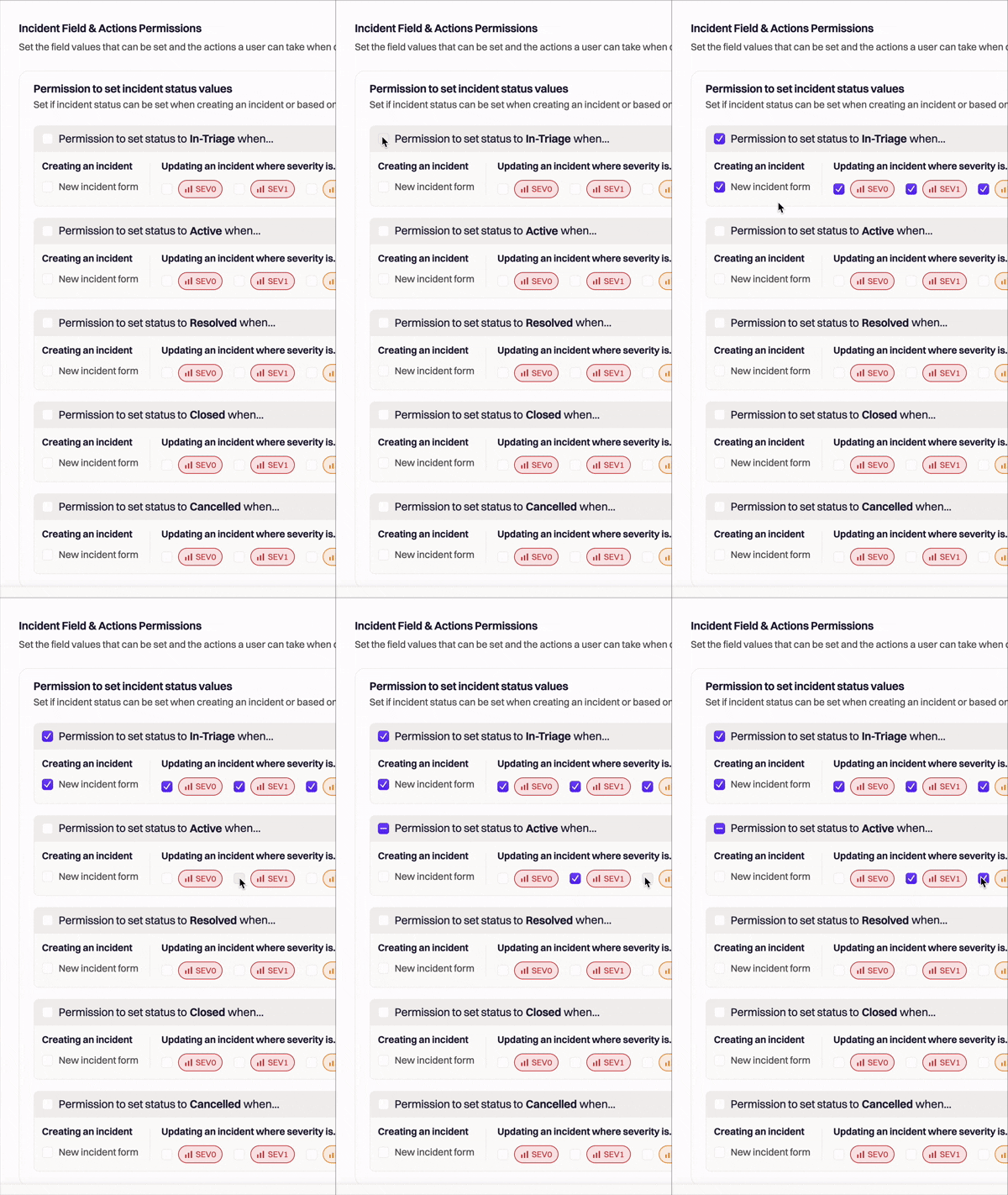

Granular permissions
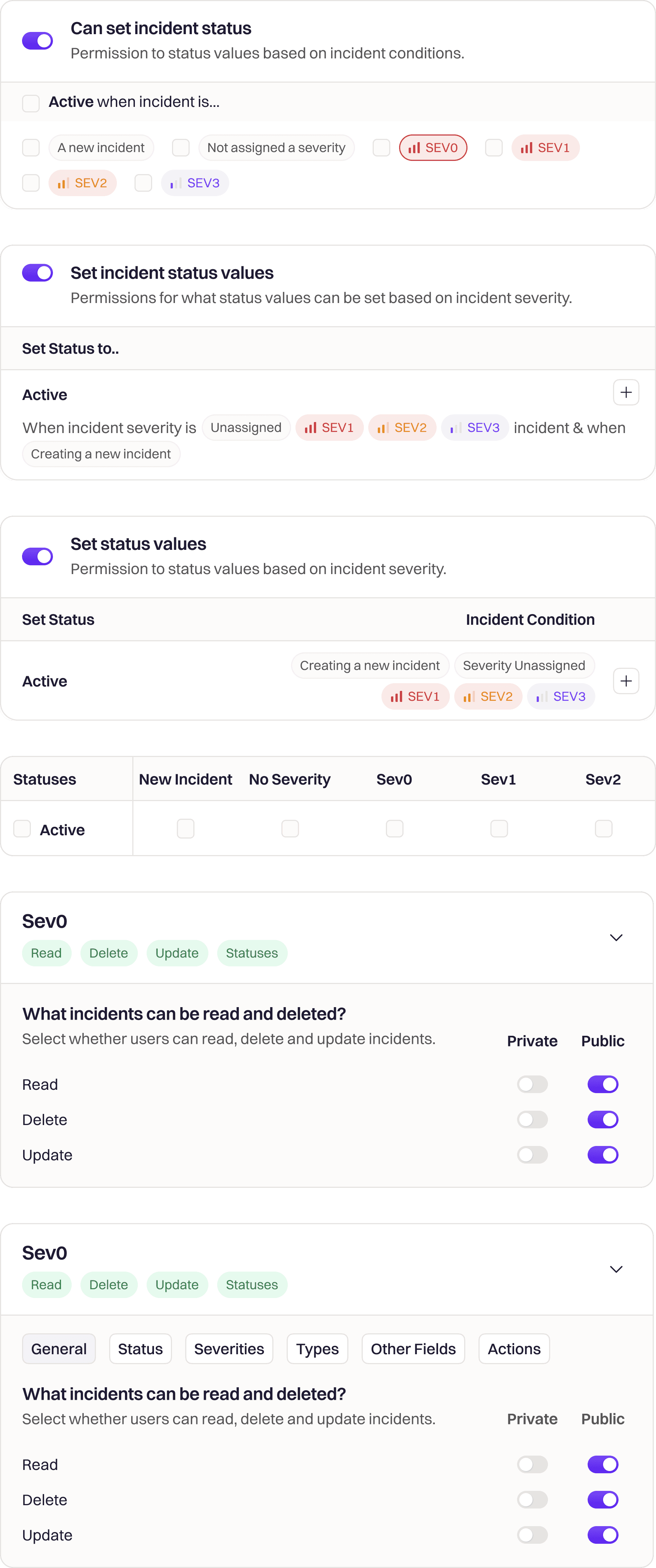
Severity based permissions are deeply layered in comparison to a typical permissions set.
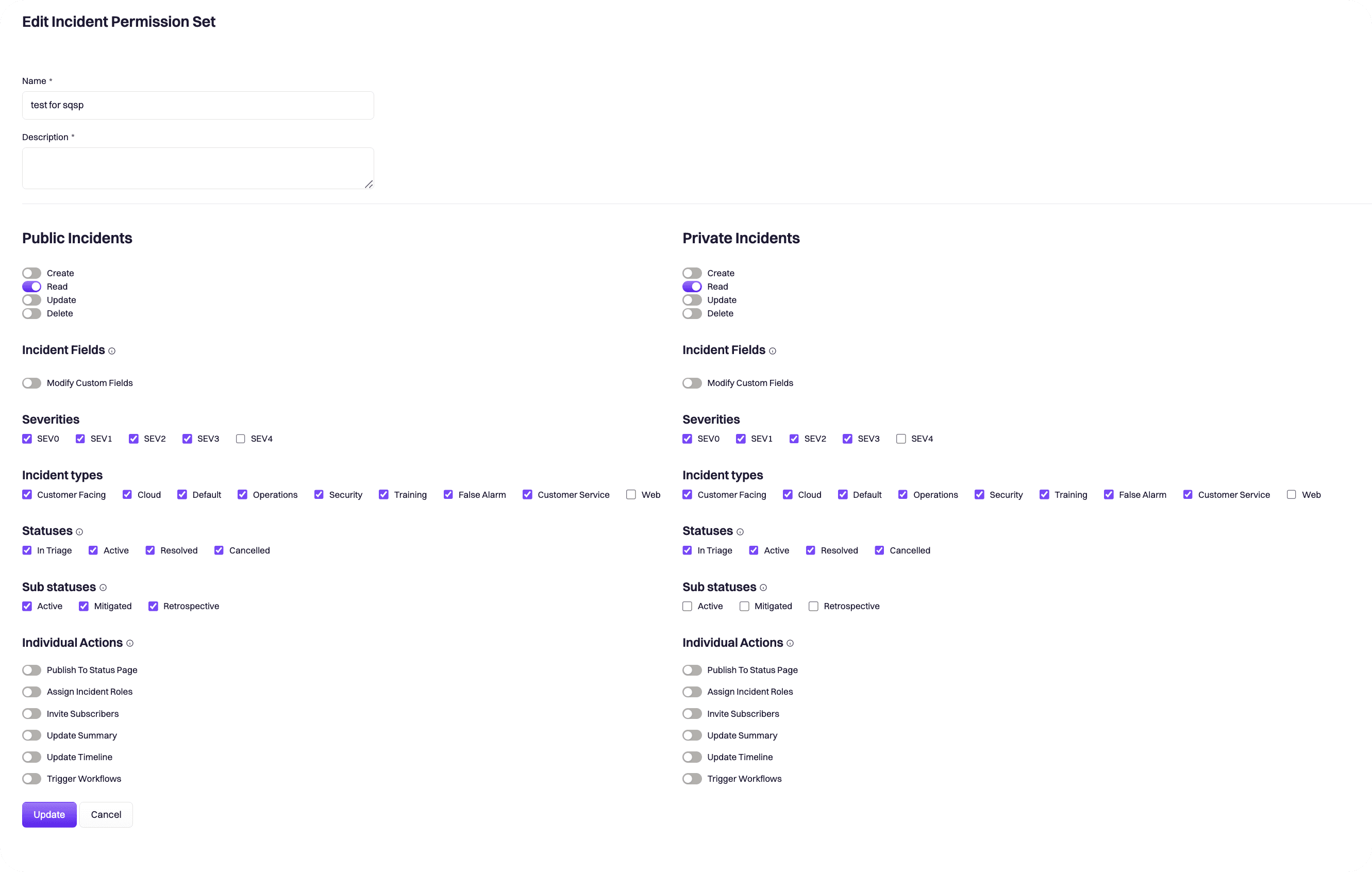
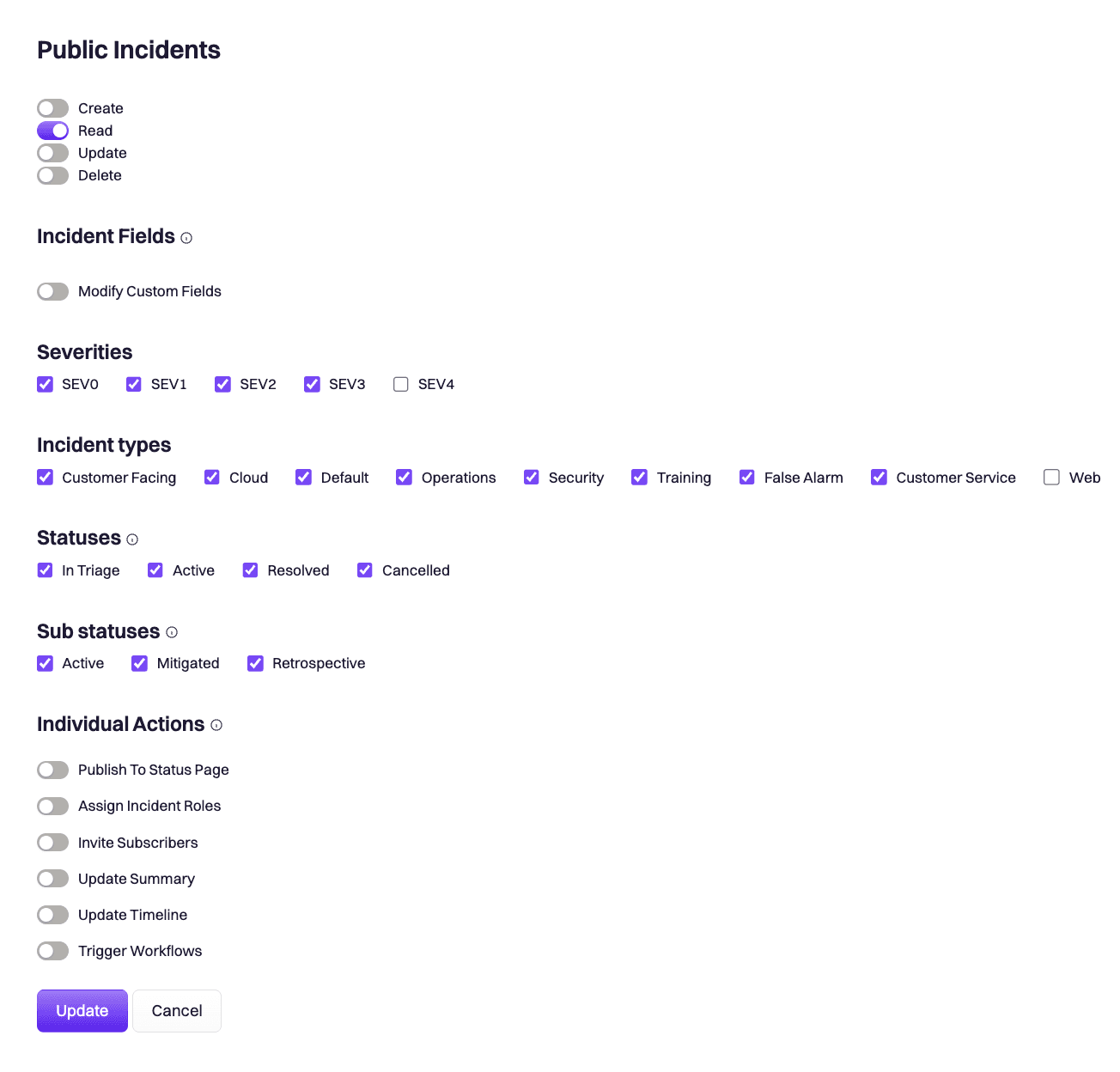
Is it a Private or Public incident?
Is it a new incident? Sev 0? Sev 3?
Can this user create, read, update or delete an incident?
Can this user set Sev 0 incident to "Resolved"?
This granularity was required when considering teams of more complex compositions, with different levels of engineers, communications, CSuite involvement.
After interviewing users, we came away with specific requirements of which permissions needed that granularity for our first release.
Feedback with Product and Design
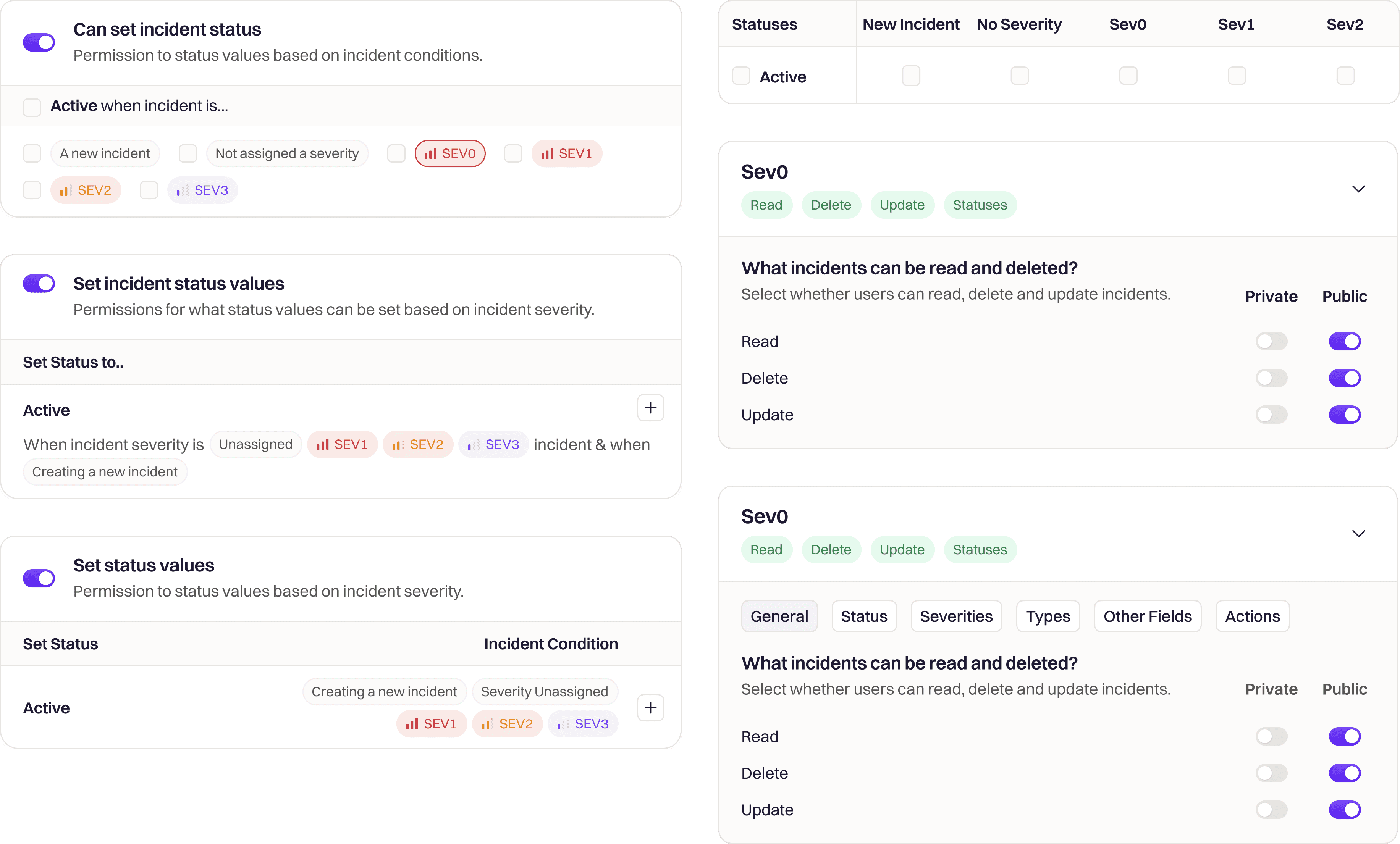
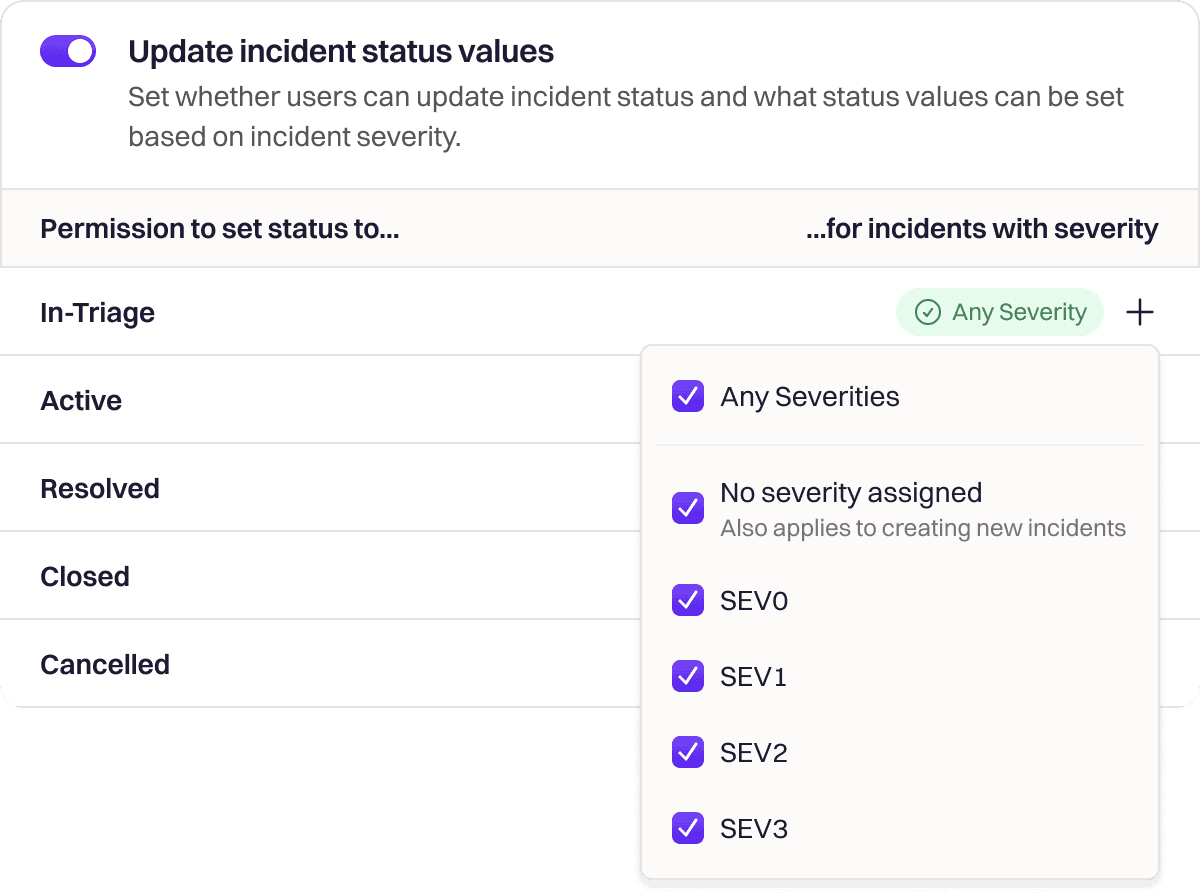
The main piece of feedback was difficulty in reading what was happening.
"Permission to set status to…" was in the header, while each status that would finish that sentence like "In- Triage" "Active" were below.
It didn't flow as easily as we would have liked.
Retrospective
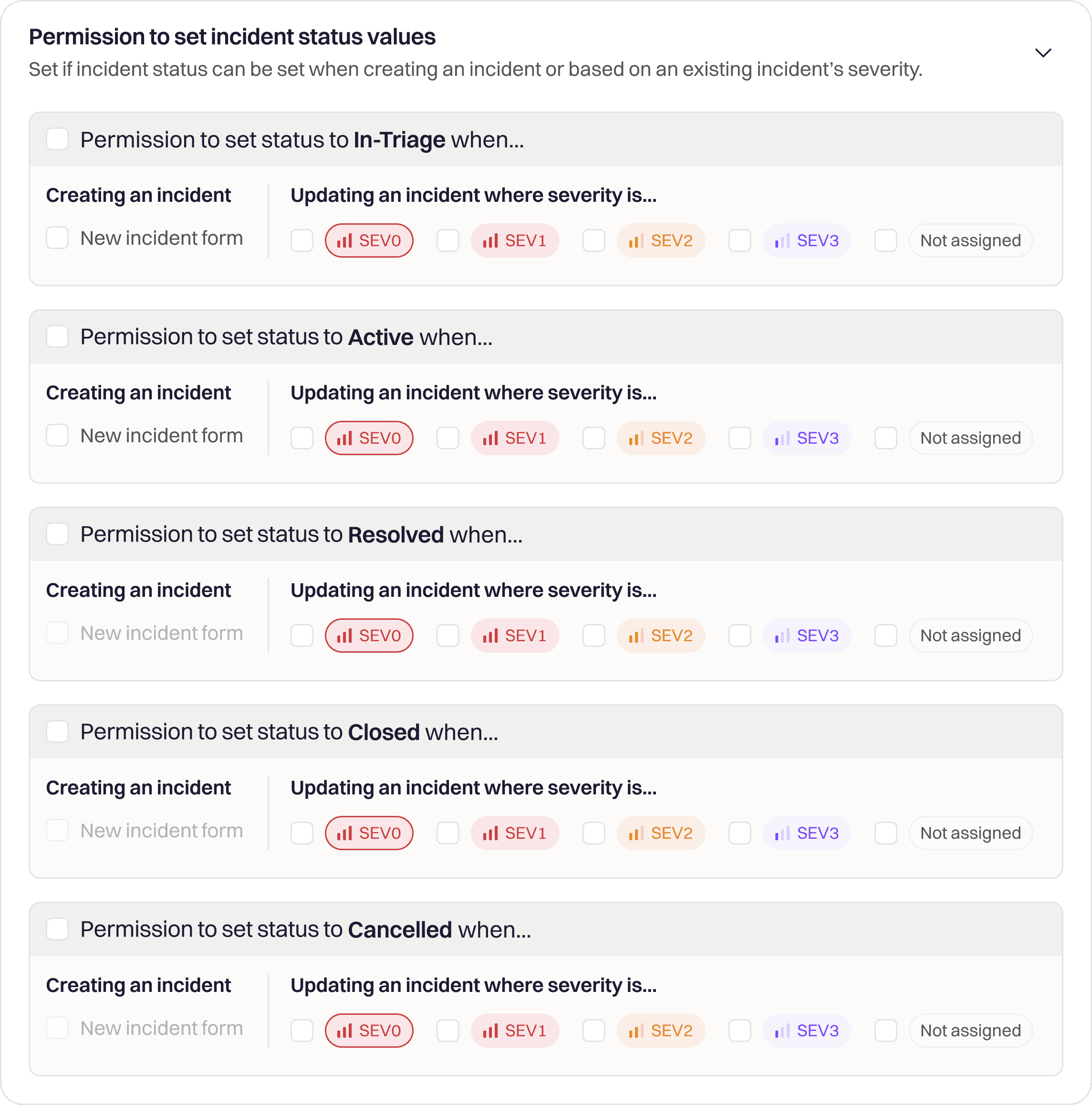
We landed the deal! Users found it incredibly easy to understand in our beta feedback calls.
However, if I were to repeat this work I'd go with a table view.
Users can create many severities with different length names, which is why we went more towards a design that favoured variable text size.
Compared to where we landed, tables provide a much cleaner overview to review the decisions you make or come in and make changes - with a bit more friction on learning or possible horizontal scrolls for users with many severities.
Prototype
Made with Figma Make